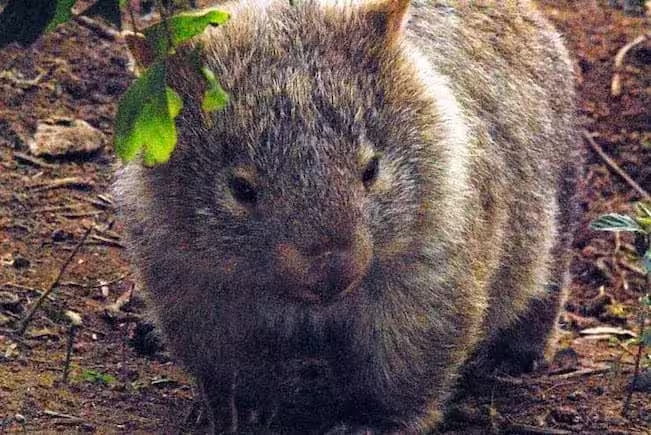
See Wild Wombats in Their Natural Habitat not in a zoo or wildlife sanctuary.
Our Wild Wombats Sydney Tour is a full-day adventure that combines a visit to the world’s largest blowhole, a rainforest walk in search of lyrebirds, a spectacular waterfall, scenic landscapes, native wildlife, and an unforgettable sunset encounter with wild wombats in their natural habitat.
Unlike zoos and wildlife parks, this is a genuine wildlife experience. The wombats, kangaroos, wallabies, and birds you encounter are completely wild and free to behave naturally, making every tour unique. Every sighting is authentic, making this tour, one of the most memorable wildlife experiences available from Sydney.
Wild Wombats Tour Highlights & Logistics
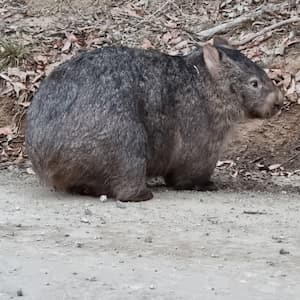
- Your Wild Wombat Experience: A private, guided walking tour to find and safely observe wild Bare-nosed Wombats (Common Wombats) as they emerge from their burrows.
- Departure & Transit: Convenient private pick-up from your downtown Sydney CBD hotel followed by a scenic 2-hour drive south through spectacular coastal, rainforest landscapes, the world’s largest blowhole and a waterfall.
- Bonus Wildlife Sightings: While the focus is on tracking wild wombats, we routinely spot native wild kangaroos, wallabies, lyrebirds, and colourful native parrots.
- Authentic Local Flavor: Includes a stop at a charming, historic Australian country pub for a late afternoon meal.
Why Book This Wild Wombats Sydney Tour
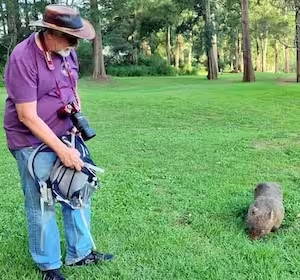
- Authentic Wildlife Experience: Walk among wild wombats, kangaroos, wallabies, and native birds.
- Private & Flexible: Only your group joins, with pick-up and drop-off anywhere in Sydney.
- Full-Day Adventure: Explore stunning landscapes, a waterfall, and rainforest trails before the wildlife encounter.
- Sunset Wildlife Viewing: Arrive at the wombat habitat at the ideal time for observing natural activity.
- Comfortable Travel: Air-conditioned vehicles sized for your group.
- Small Groups: Keeps wildlife calm and ensures a personal experience.
- Guaranteed Opportunity: If not one wombat is found, we’ll arrange another opportunity to see them at no extra cost.
What You’ll Experience
Travel through beautiful Australian landscapes visiting waterfalls, rainforest environments, and charming country towns.
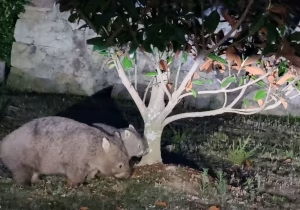
To maximise wildlife sightings, we arrive at the wombat habitat in the late afternoon when wombats begin emerging to feed.
During the tour you may:
- Walk among wild wombats
- Observe kangaroos and wallabies grazing
- Explore rainforest trails and waterfalls
- Visit scenic lookouts
- Photograph Australia’s iconic wildlife
- Enjoy a meal at a country pub (at your own expense)
Guests are often surprised by how close they can observe the animals while still respecting their natural behaviour.
CHECK AVAILABILITYWild Wombats, Kangaroos, Wallabies and more…
The Wild Wombats Sydney tour’s highlight is observing common wombats in the wild.
As wombats are most active during the late afternoon and evening, we schedule our wombat observation around sunset to provide the best viewing opportunities. Moreover, kangaroos and wallabies also become more active as night falls.
Because all wildlife is free-ranging, every tour offers a different experience. There are no enclosures, no feeding nor touching, no captive animals.
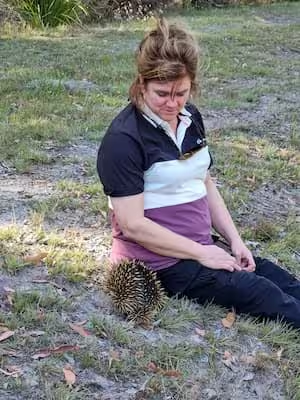
Depending on conditions and the season, you may also encounter:
- Echidnas
- Lyrebirds
- Flying foxes
- Water dragons
- Pelicans
- Kookaburras
- Cockatoos, galahs and corellas
- Crimson and eastern rosellas
- Magpies
Why Choose Our Genuine Small Private Tour?
Our Small Private Tours are genuine small group experiences, with just 2–7 guests. The following sets out a comparison between what we offer and a minibus tour.
Small Private Tour
(2–7 Guests)
Minibus Shared Tour
(Up to 20 Guests)
We Follow the Wildlife, Not the Clock
Wildlife doesn’t appear on a schedule. If we discover wildlife, we have the flexibility to stop and enjoy the moment rather than rushing to the next stop.
Fixed Timetable
Larger tours operate to a strict schedule with set arrival times, meal bookings and departure times. Wildlife encounters and scenic stops are often limited by the day’s timetable.
Quieter Wildlife Encounters
A small, quiet group blends naturally into the environment. Animals are less likely to feel threatened, allowing us to observe natural behaviour and often get much closer without disturbing them.
Larger Groups Mean More Noise
Twenty people walking towards animals naturally create more footsteps, conversation and movement. Native wildlife often detects the group well before it arrives and may retreat into cover.
Better Photography Opportunities
With fewer guests, everyone enjoys unobstructed views and more opportunities to photograph wildlife without people standing in front of the perfect shot.
Shared Viewing Opportunities
More guests means more people gathering around each wildlife sighting, making it harder for everyone to enjoy uninterrupted views or photography opportunities.
More Time Exploring
Less time boarding and disembarking the vehicle, waiting at stops or organising a large group means more time spent enjoying the highlights.
More Waiting
Boarding, unloading, bathroom breaks and regrouping all take longer with a larger number of passengers, reducing the time available to explore.
Your Day, Your Pace
Waterfalls, scenic lookouts, wildlife sightings and breaks aren’t limited by a strict timetable. We adjust the day to suit your group and the conditions.
Group Pace
The tour moves at a pace that suits the whole group, with fixed stop durations to ensure everyone remains on schedule. You are limited to the schedule of the slowest passenger.
A Personal Experience
With just 2–7 guests, you’ll have plenty of opportunities to chat with your guide, ask questions, and enjoy a relaxed, friendly atmosphere throughout the day.
Shared Guide Attention
Guides do their best to look after everyone, but with up to 20 guests there is naturally less opportunity for personalised conversations and individual attention.
Travel Time is a Two-way Conversation
Your journey is like a two-way conversation with a friend and an opportunity to learn about Australia, Sydney and its amazing animals, culture and more.
Travel Time is an Inconvenience
Your journey is sometimes a monologue over a loudspeaker or just the time taken to get from one spot to another.
Hotel Pickup
Your party is picked up at your chosen pickup location (subject to our ability to legally stop there).
Limited Pickup Locations
Limited pickup locations available.
BOOK YOUR WILDLIFE TOUR
Why Wombats Are So Special
What Does a Wombat Look Like?
Trying to explain what a wombat looks like is often difficult. These short, stocky, powerful creatures look a little like a giant hamster, an African hyrax, or a South American capybara. However, they bear no resemblance past a cursory glance. In fact, they are a direct descendant of the mighty Diprotodon—a prehistoric creature that looked similar but stood 1.8 meters high, measured 4 meters long, and died out some time after humans arrived in Australia. There are three species of wombats in Australia; the Common Wombat lives in the area we will be visiting south of Sydney.
Incredible Speed and Power
Wombats may look slow with their unique waddle, but when needed, they can run as fast as 40 km/h over short sprints—comparable to Usain Bolt! Given that they can grow up to 40 kg (making them the second-largest marsupial after the kangaroo), they are strong enough to charge at and knock down a human being.
Masters of Underground Architecture
Wombats are the world’s largest burrowing animals, creating extensive tunnel systems using powerful claws and strong forelimbs. These large marsupials live in multiple-chambered burrows across forests, woodlands, and grasslands. These wombat burrows often feature branching tunnels and entrances that are clearly marked with dung and urine.
Backward-Facing Pouches
In contrast to the kangaroo, wombats have a backward-opening pouch. This evolutionary trait prevents dirt from getting inside and covering their young while they dig. This unique feature is shared only with their closest relatives, the koala and the bandicoot.
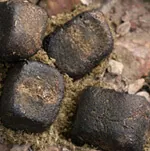
Unique Cuboid Scat
Wombat scat is cuboid—meaning it comes out in the shape of a cube, even though their anatomy is circular. It turns out you can push a square poop through a round hole! Over time, the droppings soften and become round.
Built-In Shields
When threatened, wombats can attack with strong teeth and claws, or they can hide in a burrow and block the entrance with their tough backside. Because their rump is composed almost entirely of tough cartilage, it is nearly impossible for a predator to bite or hold onto. Furthermore, they possess rodent-like teeth that never stop growing and a defensive bite that can pierce straight through heavy boots.
BOOK YOUR WILD WOMBAT TOURHealth Note (Wombat Mange): A group of wombats is known as a “wisdom.” Unfortunately, a parasitic disease called mange is found in many wild wombat wisdoms, causing severe itching that can lead to death. While conservation efforts are actively working to eradicate it in wild populations, it remains an ongoing challenge.
A True Wild Wombat Experience
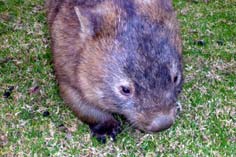
This is not a zoo, wildlife park, or sanctuary.
Watching a wombat emerge from its burrow and forage naturally offers a rare glimpse into Australia’s wildlife. While wombat sightings are common, the animals remain completely wild and are never handled or disturbed.
RESERVE NOWCustomer-Focused Experience
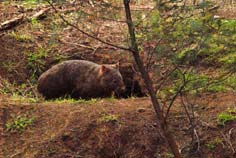
All tours are private, allowing you to enjoy the experience at your own pace. This means, we:
- Spend more time observing wildlife
- Adapt the day where possible
- Provide a more personalised experience
- Maximise photography opportunities
Vehicles are selected according to group size and are fully air-conditioned for comfort.
JOIN USWhy Guests Love Our Wild Wombat Tour
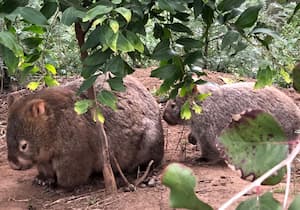
Many visitors come to Australia hoping to see iconic wildlife in the wild rather than behind fences.
This experience offers exactly that. Guests consistently tell us that watching wombats and kangaroos with Travel Ideology in their natural environment was one of the highlights of their Australian holiday.
Guest Reviews
★★★★★ “The tour was awesome! It was an enjoyable day from start to finish. We saw echidnas, wombats, kangaroos and wallabies. The guide was patient and helped us get some amazing photos.” — Jacque H
★★★★★ “Absolutely fantastic. We saw waterfalls, rainforest, kangaroos, wallabies and many wombats. It exceeded my expectations.” — Kat A
★★★★★ “Vi hade en mycket engagerad, kunnig, tillmötesgående och trevlig guide. Vi fick se flertal vombats, tom en mycket liten unge med sin mor och många kängurur i sitt vilda tillstånd. På turen sågs även bl a myrpiggsvin, kakaduor och lyrfågel.
En mycket upplevelserik dag. Tack Bruce!.” — Ingrid A
Wild Wombats Tour Details
If seeing wombats in the wild is on your Australian bucket list, this is the experience you’ve been looking for. We are Sydney’s best and original Walking with Wild Wombats Tour Sydney.
Join us for an unforgettable day exploring Australia’s natural landscapes and meeting some of its most iconic wildlife in their natural habitat.
Departure Time: Usually Between 8:45AM and 12:15PM, timed for sunset when wombats are most active.
Wildlife Guarantee: Wombats are wild animals, so sightings can’t be guaranteed. If we don’t see any, you’ll receive an opportunity to go on another search for them on another night – this has never happened!
Inclusions:
- Air-conditioned vehicle
- National Park fees
- Knowledgeable driver/guide
- Hotel pickup and drop off
Additional Information:
- Confirmation will be immediate, subject to availability
- If child is less than 8 years, you must inform us prior to the trip so that we have a child seat with us and the tour can take place. This is a legal requirement.
- All travellers must sign a waiver of liability prior to commencement of the tour. This is an insurance requirement.
- This is a private tour/activity. Only your group will participate
What to Bring
To make the most of your experience, we recommend bringing:
- Comfortable walking shoes or boots
- Warm clothing during cooler months
- A camera suitable for low-light conditions
- Drinking water
- Weather-appropriate clothing
Some areas can become muddy after rain, so sturdy footwear is recommended.
FAQs
+ Where can I see wild wombats in Sydney?
While wombats do not live in downtown Sydney, our private tour departs directly from your Sydney hotel and heads south. We spend the day exploring the area. We aim to be in the wombat habitat just before sunset. This area features a high density of free-roaming, wild Bare-nosed Wombats near Sydney.
+ Are we guaranteed to see wombats on this tour?
Wombats are nocturnal and subterranean creatures, meaning they spend their days sleeping inside complex burrows. Our expert guides track them using precise seasonal timing—arriving at their grazing fields in the late afternoon just as they emerge to feed. This significantly maximizes your chances of an up-close, safe photographic encounter. If you do not see a single wombat, we will give you the opportunity to try and find them again.
Is there a fence or enclosure keeping the wombats there?
No. This is a 100% authentic wildlife tracking experience in a natural, unfenced environment. The wombats are completely free to walk in and out of the regional valleys and bushlands as they please.

About the author