Category Archive other_en

platypus

Sydney Platypus

The Sydney platypus is almost impossible to find. They are a shy animal and close to extinction. Even if you find a place where you know they live, unless you remain absolutely quiet, it is unlikely to surface.

Meaning

The common name “platypus” literally means ‘flat-foot’, deriving from the Greek platús (meaning flat) and poús (meaning feet). The plural is platypuses, platypus or even platypi. The scientific name means duck-like bird-snout, hence the term duck-billed platypus.

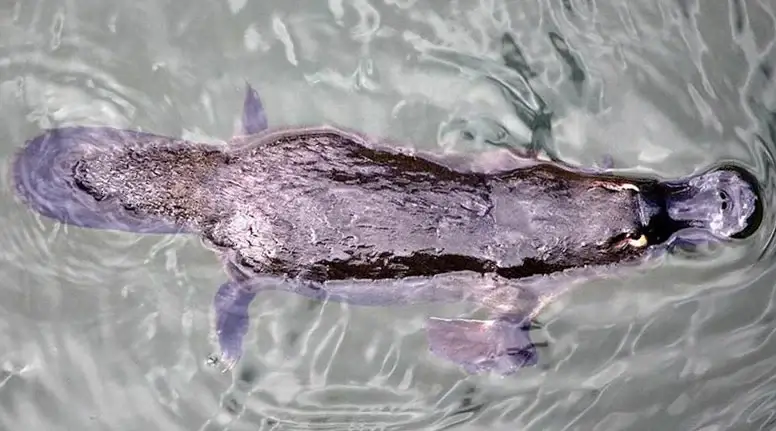
The platypus is a weird looking animal

Egg Laying Mammal

What a weird bizarre looking creature is the platypus. It, is a semiaquatic, egg-laying mammal endemic to eastern Australia, from Northern QLD to Tasmania. It is one of the few mammals that lay eggs instead of giving birth to live young, together with its cousin the echidna. The eggs are soft and hatch like snake and turtle eggs.

Uses Electrolocation

Like other monotremes, it senses prey through electrolocation. It is one of the few species of venomous mammals, as the male has a spur on its hind foot that delivers a painful venom. The venom increases during mating season.

A great swimmer and great on land

Its webbed feet are ideal for swimming in the water. When platypuses move on land they fold up the webbing under their toes and uses their claws for walking and burrowing. Their beaver like fur makes them water dynamic as they easily glide through the water.

A Hoax

The unusual appearance of this egg-laying, duck-billed, beaver-tailed, otter-footed mammal baffled European naturalists when it was first discovered, and the first scientists to examine a preserved platypus body in 1799 judged it a fake, made of several animals sewn together. It was thought to be one of the biggest animal hoaxes in history.

An Icon of Australia

It is an iconic symbol of Australia and culturally significant to several Aboriginal peoples of Australia, who used to hunt it for food. It has appeared as a mascot at the 2000 Olympics and features on the reverse of the Australian twenty-cent coin.

The platypus is the animal emblem of the state of New South Wales. Until the early 20th century, humans hunted it for its fur, but it is now protected throughout its range. Although captive-breeding programs have had only limited success, and it is vulnerable to the effects of pollution, it is not under any immediate threat of extinction.

Platypus Tours

There are areas in and around our city where platypuses are supposed to be known to live. However, we have not been able to find a location where we have had success in finding them. Due to the difficulties of finding wild platypuses in or near our city, Travel Ideology do not run Platypus tours.

We are continuously trying to find places where we can take tourists on wild platypus tours.

Where can I find a wild platypus?

Unfortunately, wild platypuses are notoriously difficult to find and spot. This leaves a trip to a zoo.

This leaves

Taronga Zoo, a short ferry ride from Circular Quay station<
Australian Reptile Park

Please note that the Australian Reptile Park is near Gosford and requires transport to get there.

Platypus FAQs

+ Can platypuses kill people?

The duck-billed platypus is one of only a few venom-producing mammals. Whilst it is unlikely to kill a human being, it will certainly give a great deal of pain.

+ How do platypuses eat without a stomach and teeth?

A platypus doesn’t have a stomach. Instead it has a separate pouch where food collects, its esophagus connects directly to its intestine. Scientists do not know why this is the case. It also has no teeth and uses a keratin plate in its bill to grind up its food.

+ How many platypuses are left?

They are listed as near threatened. There are between 30,000 and 300,000 platypuses are thought to have lived in Australia.

+ How does a platypus poop?

A platypus has a cloaca (similar to a bird) ie, it uses the same orifice to wee, poo, or have a baby. It lays eggs rather than giving birth to live young.

+ What kind of animal is a platypus?

Like its cousin the echidna, it is a monotreme or egg laying mammal.

+ What is a baby platypus called?

A puggle.

sydney koalas

Sydney Koalas

Our Sydney koalas are disappearing over time as habitat is becoming destroyed.

Meaning of Koala

The word koala comes from the Australian aboriginal languages and means no water. This is because they very rarely drink water. Instead, they live off the moisture from the green eucalyptus leaves that make up their diet. The scientific name for the animal, phascolarctos cinereus comes from the Greek phascolarctos meaning leather pouch and bear and cinereus ashen grey in colour.

Misnomer

However, koalas are not bears at all. Instead they are marsupials with a backward opening pouch and a butt consisting almost entirely of cartilage, similar to its closest cousin the wombat.

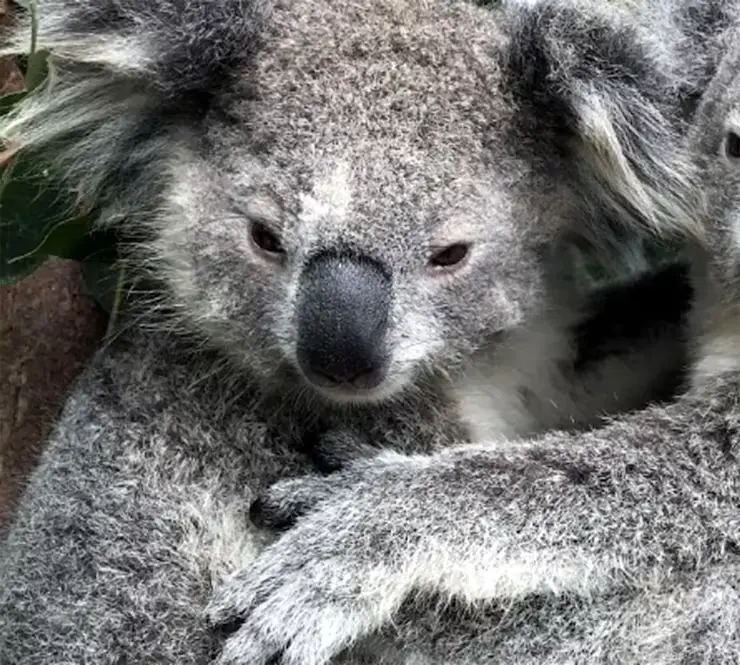
Though our koalas are painted to be cute and cuddly, wild ones are nothing of the sort. Their fuzzy looking hair is more like the coarse wool of a sheep. They have two opposing thumbs on their hands, and both their feet and hands have rough pads and serious claws to grab onto branches.
In addition, they have two toes, fused together, on their feet, which they use to comb their fur. They can also run at up to 30 km per hour. There are numerous stories of people who have tried to pick them up only to end up with severe lacerations.

Diet

The eucalyptus leaves are high in fibre and low in nutrition and are toxic to most creatures. Our koala has a long appendix filled with bacteria that allow the animal to digest the leaves.

They are not born with this bacteria in their system and need to acquire it from their mother when they are young. The mother passes on this bacteria by excreting a sticky runny faecal substance called ‘pap’, which the young koala ingests instinctively, providing it with the bacteria it needs to eat the leaves in adult life.

Sleep

However, digesting the poor in nutrition toxic diet means that they need to sleep up to 22 hours per day. This arboreal mammal is able to sit in the trees for long periods because its backside is primarily cartilage just like its cousin the wombat.

Sydney Wild Koala Tours

Whilst Sydney koalas do exist in and around our city’s suburbs, the populations are very small and finding them is next to impossible. Furthermore, once and if found, they appear as a small well camouflaged ball high in the eucalyptus trees. This makes people’s fantasies about finding and getting close to a wild koala in or near Sydney very difficult.

There are, however, some excellent places in other parts of Australia where it is possible to see them. These include: Magnetic Island, Kangaroo Island and The Great Ocean Road.

That being said we are constantly looking at colonies that come onto our radar to see if we can organise koala spotting tours with at least a 90% chance of seeing a koala in the wild.

Please check out our other Sydney Wildlife tours.

Sydney Wild Kangaroo Tours
Urban Kangaroo Tours
Wild Wombat Tours
Sydney Parrots Tours

Sydney Koalas in Captivity

koala head

We understand seeing animals in captivity is not the same as seeing them in the wild. However, for those desperate to see a koala up close, below are some resources where it is possible to see koalas in captivity.
Taronga Zoo Sydney
Koala Park
Wildlife Sydney
Featherdale Wildlife Park
Symbio Zoo
Western Sydney Zoo

Koala FAQs

+ What is a group of koalas called?

As koalas are fairly solitary animals they don’t generally live in groups. However, a group of koalas (based on the location they live in) is normally called a colony or a population of koalas.

+ Where do koalas live?

They live in open eucalyptus forests in the Eastern part of Australia.

+ Are koalas endangered?

They are listed as endangered and it is thought that there are less than 80,000 in the wild. Unlike many other animals, koalas are not in many zoos outside of Australia due to their strict diet of eucalyptus leaves and the expense in creating a eucalyptus forest just to feed them. There are only a few zoos in Japan, Europe and USA where koalas can be found.

+ Is it true that koalas have chlamydia?

Yes. In some areas up to 90% of the koala population in Australia are infected with Chlamydia.

+ Are koalas friendly?

Just like other wild animals, prefer no contact with human beings.

+ What does a koala eat?

Koalas are strict herbivores. Not only that, they do not eat fruit. In fact they eat only from a few kinds of eucalyptus trees.

+ Are koalas aggressive?

Koalas are normally quite relaxed. However, threats to their territory, their safety or their young triggers an aggressive response. They can pact a punch for their small size. They have extremely strong claws built for climbing trees supplemented with extremely strong arms and strong teeth. Many reports of people trying to help one to safety have ended in bites and scratches because people thought they were cute and cuddly rather than wild animals.

+ How many hours does a koala sleep?

Because of the poor nutrition and toxins in their diet, they sleep up to 22 hours a day and generally eat the rest of the time.

+ Are koalas the dumbest animal?

They have the smallest brains of any known mammals and receive something similar to a ‘high’ on the oils from the eucalyptus leaves. These frisky furry friends spread sexual transmitted diseases including chlamydia. They also sleep up to 22 hours a day to process the toxins in their diet.

+ Why are koalas only in Australia?

Koalas are found only in Australia as they only eat about 15 species of eucalyptus leaves only found in Australia.

+ Do koalas have 2 thumbs?

Like humans, koalas have opposable thumbs. In fact, koalas have two of them on each hand! This makes it easier to grip the trees when climbing.

+ Does a koala have 5 fingers?

Yes. Koalas have three fingers and two thumbs on each paw. On the lower paws, the two thumbs are fused together and are also used for grooming.

+ What happens if koalas don’t eat eucalyptus?

They die. They require their specialist diet of eucalyptus leaves and have a specially designed stomach to process the toxins of the eucalyptus leaves. Only two other animals: the greater glider and the ringtail possum can eat eucalyptus leaves.

+ Do koalas eat poop?

Yes. A baby koala eats the runny substance that follows their mother’s poop called pap. This allows their intestine to grow the bacteria required to break down the toxins in the eucalyptus leaves that they eat.

+ Do koalas need to drink?

Generally the answer is no. In fact the word koala means “no water”. Koalas don’t normally need to drink as they get all the moisture they need from the gum leaves. However, they do drink when necessary, such as in times of drought when the leaves may not contain sufficient moisture.

+ Can I cuddle or pat a koala?

In NSW, it is illegal to hold a koala without a special license. Some other states do offer the opportunity to do so. There are a few places where you can pat a koala. These are namely,
Taronga Zoo
Featherdale Wildlife Park
Koala Park
Symbio Zoo
Western Sydney Zoo
Please note that pricing and experience varies considerably.

+ Can I go on a wild koala tour in Sydney?

At present we do not offer a koala tour. As it is extremely difficult to find them in the wild and when we do, they are a small well camouflaged spot high in the trees.